Wafi Admin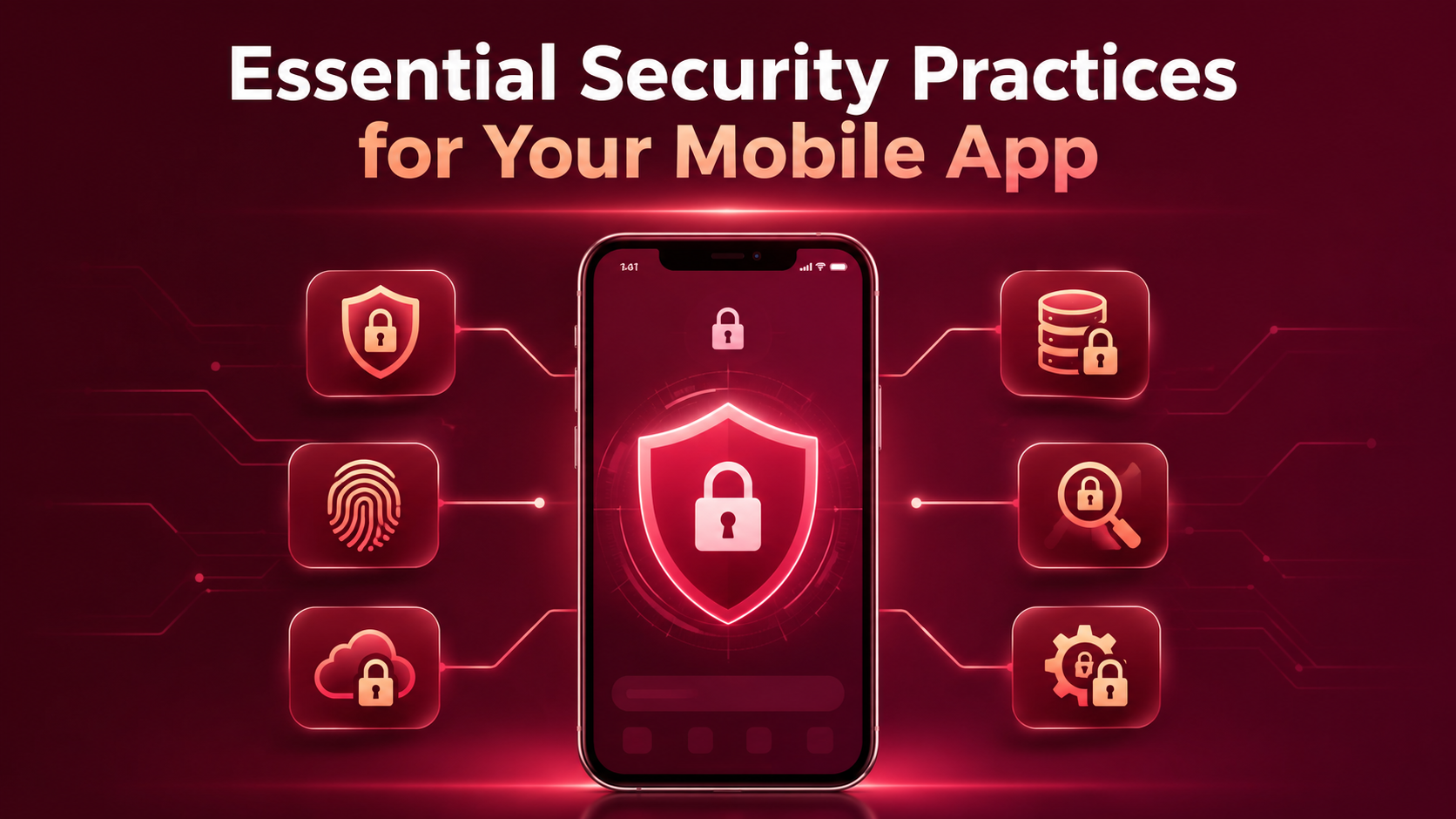
Mobile apps increasingly handle sensitive information, authentication, payments, business data, and connections to APIs and cloud services — that combination creates mobile app vulnerabilities and expands the attack surface.
An app can remain vulnerable even after developers secure the device or add encryption. Mobile app security today spans multiple layers — the app itself, the API, the data, third-party dependencies, and the runtime environment.
This article covers mobile app security best practices for 2026: the data protection habits, security testing steps, and practical checks that matter from development through post-launch monitoring.
What Is Mobile App Security?
Mobile app security means protecting everything inside your app. The code, the data it stores, how it checks who’s logging in, the APIs it calls, and its connection to your backend. Good security prevents attackers from stealing data, altering how the app behaves, or exploiting a weak spot in any of these layers.
That’s different from mobile device security — which protects the phone itself. App security protects what runs inside it, not the hardware.
10 Mobile App Security Best Practices for 2026
Encryption alone won’t stop a breach, and neither will authentication by itself. Real protection stacks several controls together — so if one layer misses something, another layer catches it.
These ten mobile app security best practices cover the full security lifecycle, from the first line of code to the servers the app talks to after launch.
Build Security Into the App From Day One
Most teams treat mobile app security as a final checklist before launch. Secure mobile app development takes a security by design approach, weaving threat modeling, security requirements, and secure architecture into planning.
Secure coding and code review continue through testing. OWASP MASVS gives teams a recognized benchmark for mobile application security and maps the attack surface early.
Protect Data at Rest and in Transit
Mobile app security starts with protecting data in two different states: at rest and in transit. Encryption at rest keeps information safe while it sits on the device. Encryption in transit protects that same data while it travels to your server — both rely on solid data encryption, and neither works if the keys guarding them are careless.
For data at rest:
- Store tokens, passwords, and other secrets in secure storage like Android Keystore or iOS Keychain — hardware-backed vaults built into the device.
- Treat secure data storage as the default for anything the app saves locally.
- Avoid plaintext entirely. A stolen phone should never hand over readable credentials.
For data in transit:
- Send every request over HTTPS riding on TLS, so nobody can read the data mid-transit.
- Validate certificates properly instead of accepting whatever the network offers.
- Add certificate pinning for apps handling money or health records, where the threat model justifies the extra step.
Never Hardcode API Keys, Credentials or Secrets
Hardcoded API keys never stay hidden. Attackers can open your app’s binary and pull out every password, token, or cryptographic key buried inside the code.
Real API security starts with securing credentials outside the app entirely. Store database and cloud secrets in a secret manager, rotate keys often — and give each one only the access it needs.
Strengthen Authentication and Session Management
Weak logins and sloppy sessions open the door for attackers. Steal a password or a stray access token, and someone can pose as that user until the app logs them out.
Multi-factor authentication, biometrics, and OAuth confirm who someone is. Session limits and refresh-token protection decide how long they stay in. Authentication proves identity — authorization decides what they can do.
- Multi-factor authentication: Add a second check like a code or fingerprint beyond passwords.
- Short-lived access tokens: Expire tokens quickly — so stolen ones become useless fast.
- Secure token storage: Keep tokens in encrypted device storage, never in plain text.
- Refresh-token protection: Rotate refresh tokens on each use to catch stolen ones early.
- Session expiration rules: Log users out automatically after set periods of inactivity.
Secure APIs and Backend Services
Your mobile app is only as secure as the backend behind it. Hackers often go after the APIs that move data between your app and your servers, even old ones nobody tracks.
Never let the app decide who sees what. A hacked app can still send real-looking requests, so the server checks each one. The OWASP API Security covers exactly these risks.
- Confirm who’s calling before granting access.
- Check what they’re allowed to see, too.
- Screen every input before it reaches your database.
- Cap how many requests one user can send.
- Hide sensitive data in error messages.
Validate Input and Prevent Injection Attacks
Mobile app security depends on one simple rule: never trust data your app didn’t create. Malicious input hides in forms, links, and other requests, waiting for a system that skips input validation.
Ignore that check, and an injection attack can hijack your database or servers within seconds. Secure coding starts with treating every incoming request as untrusted input.
- SQL injection: Attackers sneak commands into a form to reach your database directly.
- Command injection: Hidden commands travel through input fields to control your app’s system.
- Server-side validation: Check data on your server, since checks inside the app alone can be bypassed.
- Parameterized queries: Treat every piece of input as plain data, never as a command.
Secure Third-Party SDKs and Dependencies
Every third-party SDK and open-source library adds risk to your mobile app security. Software supply chain security means checking every dependency your app borrows, since one vulnerable dependency exposes everyone.
- Track every third-party dependency your app relies on.
- Run dependency scanning to catch a known CVE early.
- Keep an SBOM listing every component inside your app.
- Apply security patches to outdated open-source libraries fast.
Protect the App From Reverse Engineering and Tampering
Attackers can open your app’s binary — the compiled file that runs on a phone — and pick it apart line by line. They read the code, change it, or attach a debugger to watch it work in real time.
Strong mobile app security raises the cost of this attack. It never removes the risk entirely — since a determined attacker with enough time can still find a way in.
- Code obfuscation: Scrambles the app’s logic so reverse engineering takes far longer.
- Tamper detection: Flags changes to the app and protects its integrity.
- Root and jailbreak detection: Spots rooted or jailbroken devices, where phone-level protections are already disabled.
- Runtime protection (RASP): Watches the app while it runs and blocks anti-debugging bypasses in real time.
Test Security Throughout the Development Lifecycle
Mobile app security testing works best as a habit — not a one-time event before launch. Run checks at every stage, and small flaws surface while they’re still cheap to fix.
Automated tools catch the common mistakes fast. Penetration testing and deeper dynamic analysis dig into the tricky stuff automation misses. OWASP’s MASTG pairs well with MASVS here — giving your team a clear testing roadmap to follow.
- SAST: Scans your code for weak spots before it ever runs.
- DAST: Tests the live app the way an attacker would.
- Dependency scanning: Flags risky third-party code hiding in your app.
- API testing: Checks that your app’s connections stay locked down.
- CI/CD security checks: Run automatically, then regression testing confirms old fixes still hold.
Monitor, Patch and Respond After Launch
Mobile app security work does not stop at the App Store or Google Play. A safe launch today can face a new vulnerability tomorrow.
Teams need ongoing security monitoring and fast incident response to catch problems early and fix them before they spread.
- Threat monitoring and security telemetry to spot unusual behavior.
- Suspicious login or activity detection.
- Emergency security patch releases and credential rotation.
- Post-launch security reviews after every incident.
Wafi Solutions builds and reviews mobile apps in-house — the same engineers who write the code handle the security testing, the API hardening, and the patches after launch.
If you want a security review of an app you already run, or a secure build from the start, talk to us about your project.